







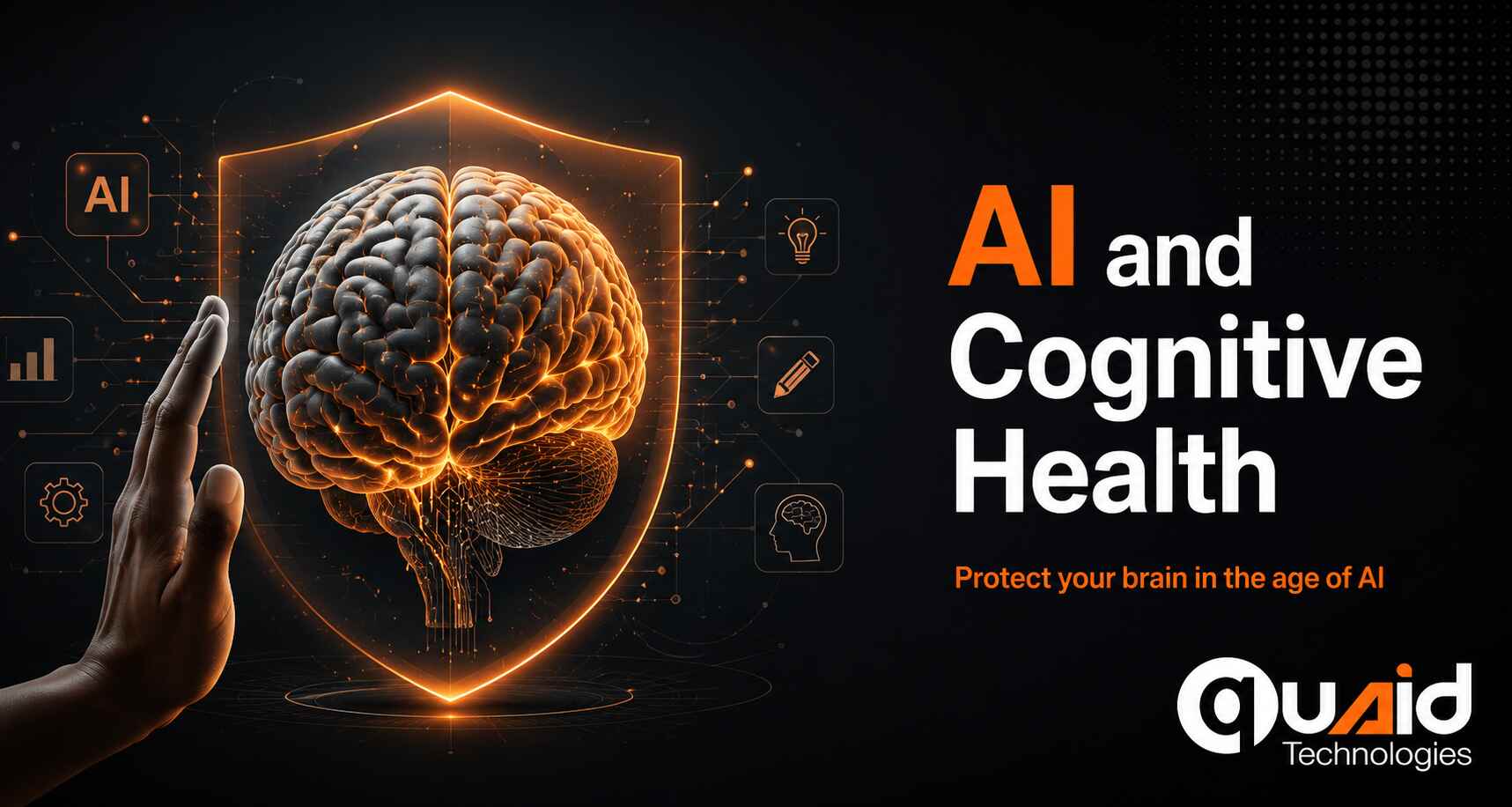
Think Outside the Bots: How to Protect Cognitive Health in the Age of AI
As artificial intelligence becomes deeply integrated into daily tasks—from drafting emails to summarizing complex documents—neuroscientists and psychologists are raising important questions about the long-term impact of these tools on the human brain. While AI offers unprecedented efficiency, emerging research suggests that over-relying on automated systems for critical thinking, memory, and creative output could lead to cognitive atrophy. The consensus among experts is clear: the goal is not to abandon technology, but to change how we interact with it to keep our mental “muscles” sharp.
At PakCyber, we specialize in Digital Transformation and Software Development, helping businesses navigate the complexities of integrating AI into their operational workflows. Our role is to provide the strategic architecture required to implement AI as a catalyst for human ingenuity rather than a replacement for it. We help our clients design systems that leverage automated efficiency for rote tasks while preserving the critical human oversight and cognitive engagement necessary for innovation, ensuring that digital tools enhance—rather than diminish—your team’s core competencies.
The “Gym” Metaphor for the Brain
Neuroscientists like Adam Green from Georgetown University compare using AI for every cognitive task to having a robot lift your weights at the gym; the task gets done, but your “muscles” get no workout. Studies indicate that when we outsource processes like essay writing, complex scheduling, or analytical problem-solving to chatbots, we bypass the “cognitive friction” that is essential for building long-term memory and sharpening critical thinking.
Strategies for Mindful AI Usage
To ensure AI remains a beneficial tool rather than a cognitive crutch, experts recommend the following practices:
- Pressure-Test, Don’t Outsource: Form your own rough view on a topic before consulting an AI. Use the AI to challenge or refine your perspective rather than generating the initial answer for you.
- Engage in “Good Friction”: Avoid using AI for instant summaries. Take the time to read, research, and take notes by hand. This deliberate slowing down helps cement information in long-term memory.
- Protect Your Creative Muscle: When starting a creative project, spend significant time with a blank page first. Develop your own rough ideas, connections, and structure before using AI to poke holes in or polish your work.
- Embrace Boredom: Resistance to difficulty is a natural human reaction, but sitting with a “hard” problem without an immediate AI shortcut is the best way to train your brain to tolerate the discomfort that leads to deeper thinking.
The Future of Human Value
While digital probability machines are excellent at prediction, they lack the personal, unexpected connections that define human intelligence. Experts believe that the ability to “think outside the bots”—to maintain original, analytical, and genuinely creative processes—will be the most significant value-add for professionals in the coming years. By choosing to remain in the driver’s seat of our own cognitive processes, we ensure that as technology evolves, our capacity to think, create, and solve problems remains our greatest strength.
FAQs About AI and Cognitive Health
Can AI actually cause cognitive decline?
Experts suggest that over-relying on AI can lead to “cognitive atrophy” in areas like creativity, memory, and critical thinking because the brain is not being challenged to perform those mental tasks itself. The process of struggling through a problem is often what builds mental sharpness.
How can I use AI without harming my cognitive health?
You can protect your mental acuity by using AI to challenge or pressure-test your existing ideas rather than having it generate answers from scratch. It is also recommended to add “friction” to your work, such as taking notes by hand, researching manually, and drafting creative projects yourself before using AI to refine or edit them.
Why is “cognitive friction” important?
Cognitive friction refers to the mental effort required to solve complex problems. When we outsource this labor to AI, we skip the neural workout—the false starts, connections, and breakthroughs—that is essential for building and maintaining long-term cognitive capability.
Does this mean I should stop using AI tools?
Not at all. The consensus is that AI is not inherently good or bad; it depends on how we use it. Experts recommend using AI to free up space for more important work, provided you maintain your own critical engagement with the subjects you are working on.
How does PakCyber help businesses balance AI and human performance?
PakCyber provides strategic digital transformation services to help businesses integrate AI in a way that automates rote tasks while preserving human critical thinking. We ensure that technology is implemented as a tool to amplify your team’s innovative potential, rather than a replacement for necessary cognitive engagement.

Author